
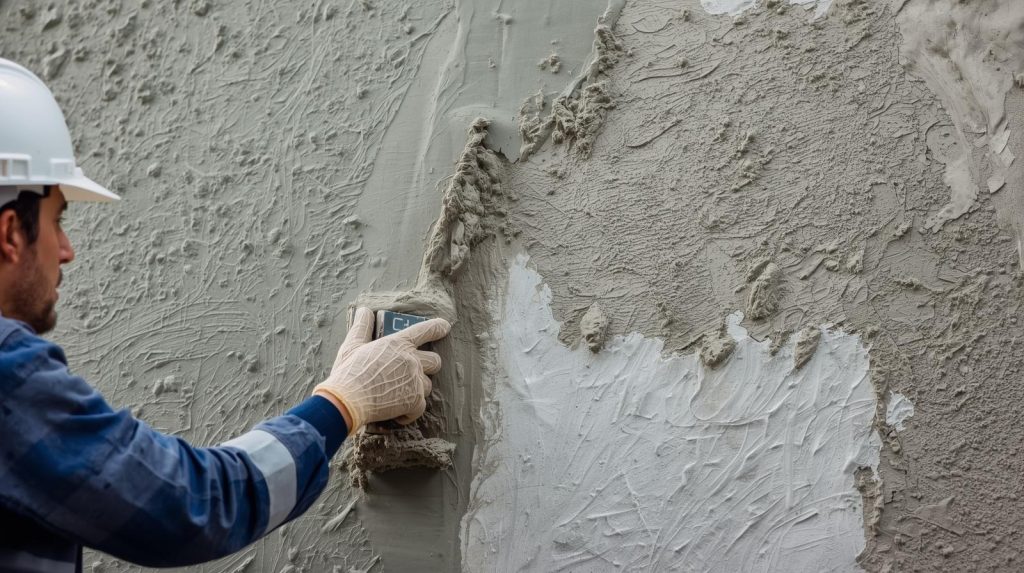
A no-fluff, no-nonsense guide to cement rendering, texture coatings, granosite finishes, and why your rendered walls deserve better than a fresh coat of paint over a crack.
If you’ve ever driven past a house with peeling, bubbling, or cratered walls and thought, “That poor place,” — welcome. That house might be yours. Or it might be your neighbour’s, and you’re quietly grateful it isn’t. Either way, you’ve probably started wondering whether rendering is worth it, what it actually involves, and whether the bloke down the road who did it last year got ripped off.
Good news: you’ve landed in the right spot.
At J & R Rendering, we’ve been transforming tired Sydney homes into street-stopping properties across the basin — from Parramatta to the Northern Beaches, the Hills District to the Inner West. This guide covers everything: what rendering is, why Sydney homes specifically need it, which finish suits your walls, how the whole process runs, and what sets quality work apart from a backyard job.
Pull up a chair. This one’s worth reading properly.
So… What Even Is Wall Rendering?
Let’s not over-complicate it. Rendering is the process of applying a protective and decorative coating — typically made from cement, acrylic, polymer, or a combination — to the exterior (and sometimes interior) walls of a home or building.
Think of it as a skin for your home’s bones. A well-applied render does several things simultaneously: it weatherproofs the substrate, levels out surface imperfections, and gives the facade a clean, contemporary finish that paint alone simply can’t deliver.
The cement rendering services available today have evolved significantly from the old sand-and-cement slap jobs of decades past. Modern systems use polymer-modified mixes, flexible acrylic binders, and purpose-engineered texture finishes — each suited to different substrates, climates, and aesthetic goals.
Sydney, in particular, demands a lot from its buildings. You’ve got coastal salt spray in the east, clay-heavy soils in the west causing ground movement, and that relentless combination of UV exposure and humidity everywhere in between. A render system that performs brilliantly in Tasmania might crack, peel, or fade within a couple of Sydney summers. That’s why knowing your options matters.
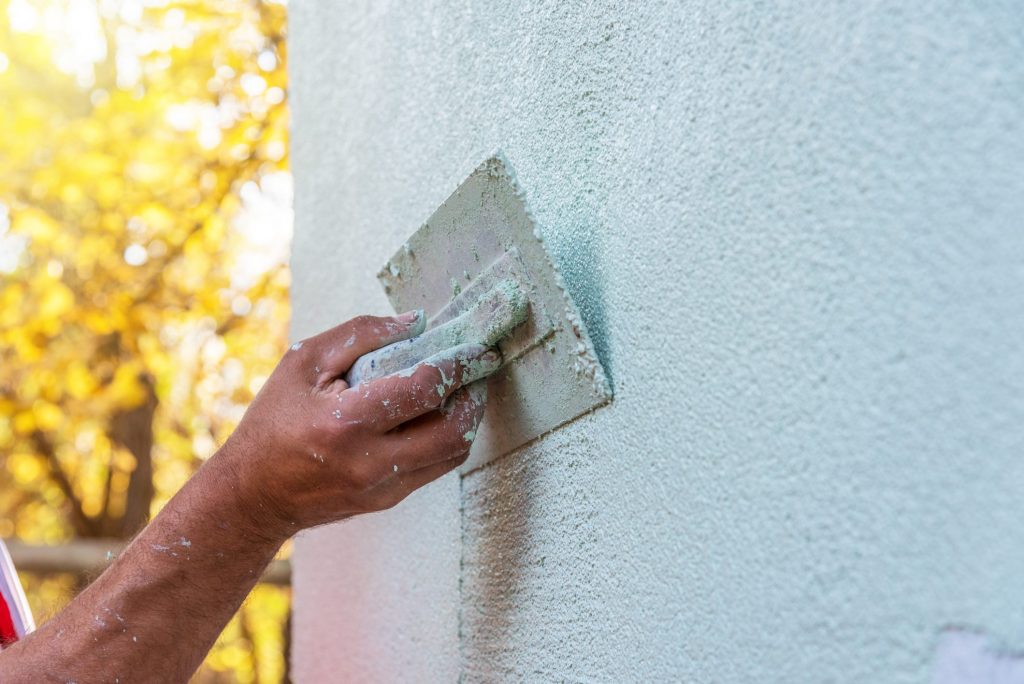
Why Sydney Homeowners Choose Rendering Over Paint (Again and Again)
Here’s a question worth asking: why do Sydney homeowners keep coming back to rendering rather than just slapping on another coat of Dulux and calling it a day?
Because paint is a film. Render is a system.
Paint sits on the surface. A 0.1–0.2mm layer of pigment and binder, largely at the mercy of whatever the wall beneath it is doing. When moisture gets behind it, it blisters. When the wall moves even slightly, it cracks. And in Sydney’s climate, both of those things happen regularly.
Rendering, by contrast, forms a bonded layer that becomes structurally part of the wall assembly. It can bridge minor cracks, resist moisture ingress, handle UV without chalking, and — depending on the system — remain maintenance-free for 15 to 20 years.
Beyond durability, here’s what homeowners consistently tell us drives their decision:
Street appeal. A rendered facade photographs differently. It reads as contemporary, intentional, finished. Real estate agents will tell you — and the data backs them up — that a freshly rendered home commands stronger buyer interest and higher sale prices than an equivalent unrendered property.
Insulation value. Rendered walls, particularly those with an EPS (expanded polystyrene) substrate, provide measurable thermal resistance. You’re running the air con less in summer and the heater less in winter. Over years, that adds up.
Noise reduction. Dense render coatings add mass to external walls, which dampens ambient road noise. Particularly relevant for homes near arterials in Sydney’s middle ring suburbs.
Mould and moisture resistance. Acrylic and polymer render systems are hydrophobic — they repel water rather than absorbing it. For Sydney’s humid coastal pockets, this is genuinely valuable.
Low ongoing maintenance. A well-specified render system doesn’t need repainting every few years. Clean it down periodically, address any mechanical damage promptly, and it performs for decades.
The Sydney Rendering Glossary: Types Explained Without the Jargon
Walk into any conversation about rendering in Sydney and you’ll quickly run into terms like “acrylic,” “texture coat,” “granosite,” and “bagging.” Here’s what they actually mean and when each one is the right call.
Cement Rendering
The original and still widely used. Cement rendering in Sydney involves applying a sand-and-cement mix directly to brick, block, or concrete substrate — typically in two coats (a scratch coat and a finishing coat), sometimes with a polymer additive for improved adhesion and flexibility.
Cement render gives a clean, hard finish. It’s the go-to for older brick homes where you want a smooth, paintable exterior, and for heritage-adjacent properties where a heavier, more solid-looking finish suits the architecture. It’s the most affordable option per square metre, though it typically needs painting after application.
Best suited for: Brick veneer homes, cavity brick, concrete masonry. Properties in the middle and western suburbs where coastal movement is less severe.
Limitations: Less flexible than acrylic systems. Can develop hairline cracks in areas of ground movement if not correctly specified or reinforced.
Acrylic Rendering
Acrylic render uses a polymer-modified binder that gives the finished coat genuine flexibility — it can accommodate minor substrate movement without transmitting cracks to the surface. It also comes pre-coloured, eliminating the need for a separate painting step.
Acrylic rendering is particularly suited to Sydney’s coastal suburbs where salt-laden air, moisture cycling, and UV exposure demand a more resilient surface. It adheres to a wider range of substrates including fibre cement, painted surfaces (with correct preparation), and polystyrene cladding systems.
Best suited for: Coastal and near-coastal properties. Homes with a history of surface cracking. Renovations where the existing substrate is varied or less-than-perfect.
The catch: Acrylic render costs more per metre than cement render and requires experienced applicators — rushed or poorly prepared applications can lead to delamination or uneven finish.
Texture Rendering
Texture rendering refers to a decorative finish coat applied over a base render. Where a smooth acrylic or cement finish gives you a clean contemporary look, textured render for Sydney homes introduces physical dimension — anything from a fine sand texture through to a coarser aggregate finish.
Texture finishes do double duty: they’re visually interesting, and they’re particularly good at concealing minor imperfections in the substrate. If your wall has some age and character, a textured finish will embrace it rather than highlight it.
Application methods include trowelling (for a manual, hand-crafted look), rolling (for a more uniform texture), and spraying (for consistent coverage on large facades). Each method produces a different result, and the right choice depends on the architecture, the wall condition, and the aesthetic you’re after.
Granosite Finish
Granosite is arguably Sydney’s best-known texture coating brand — and for good reason. Originally developed in Sydney’s Northern Suburbs over 60 years ago, Granosite has become synonymous with durable, weather-resistant exterior finishes across residential and commercial properties nationwide.
A durable Granosite finish in Sydney is an acrylic-based texture coating applied over a prepared substrate. It’s available in an enormous range of colours and texture profiles — fine, medium, and coarse — and is specifically formulated to handle the extremes of the Australian climate, including the coastal salt spray and UV intensity unique to Sydney.
What makes Granosite stand apart from generic texture coats? The formulation quality is consistently high, and — critically — it’s a system. When applied correctly (base coat, intermediate coat where required, and finish coat with appropriate primer), Granosite products are rated to last up to 20 years. That’s longer than most people will stay in the same house.
It’s also worth noting: Granosite excels on seaside buildings. The water-based acrylic formulation provides genuine resistance to salt air, making it the logical choice for properties near the Harbour, in the Eastern Suburbs, or on the Northern Beaches.
Best suited for: Homes in coastal or near-coastal Sydney areas. Properties where the client wants a long-lasting, low-maintenance exterior. Commercial facades requiring a premium finish.
What Happens When Rendering Goes Wrong: The Case for Proper Repairs
Here’s the thing about rendered walls that nobody wants to talk about — they don’t last forever, and when they start to fail, they fail in specific, identifiable ways.
Hairline cracking, delamination, hollow spots, efflorescence (those white salt deposits creeping through the surface), bubbling, and large structural cracks — these are all symptoms of either incorrect specification, poor surface preparation, application errors, or underlying structural movement.
The wrong answer is to patch over them with filler and paint. That approach buys you perhaps 12 months before the same issues re-emerge, often worse.
The right answer is proper damaged render repair in Sydney carried out by someone who can actually diagnose the cause before reaching for the trowel. If the crack is cosmetic — a hairline resulting from normal thermal expansion — it can be routed, filled, and blended. If it’s the symptom of ongoing ground movement, addressing the crack without addressing the movement is a waste of everyone’s money.
Common scenarios we see:
- Single-storey brick homes in Western Sydney with widespread cement render cracking due to clay soil movement. Requires flexible system over remediated base.
- 1970s–80s brick veneer homes with failed original renders bagged with sand/cement. Debonded sections need full removal before re-rendering.
- Coastal properties in the Eastern Suburbs where original cement render has carbonated and lost adhesion over decades of salt exposure. Partial or full re-render using acrylic system.
- Units and townhouses where a previous owner’s DIY render patch is visible from the street and the body corporate is embarrassed. Targeted repair and blending work.
The diagnostic step is the critical one. Anyone can mix up some render and trowel it on. Understanding why the existing render failed is what separates a repair that lasts from one that’s back in the same condition in two years.
The J & R Rendering Process: From First Call to Finished Facade
We get asked this a lot: “What actually happens between ringing you and having a finished wall?” So here’s the honest run-down.
Step 1: Site inspection and scoping
We visit the property, assess the substrate, note any existing render failures or damage, identify the appropriate system, and provide a detailed written quote. No surprises, no scope creep. If there’s remediation required before rendering can proceed, we flag it upfront.
Step 2: Surface preparation
This is where most of the real work happens, and where corners are most commonly cut. Proper preparation includes high-pressure cleaning to remove contaminants, cutting out and repairing damaged or hollow sections of existing render, applying bonding agents or primers appropriate to the substrate, and protecting windows, doors, landscaping, and paving from overspray.
If you want to know why two rendering quotes can differ significantly in price — this is usually where you’ll find the answer. Adequate preparation adds time and cost. But a render that fails because the surface wasn’t prepared is a false economy.
Step 3: Base coat application
For cement render systems, a scratch coat is applied and keyed to improve mechanical adhesion for the finishing coat. For acrylic and Granosite systems, a suitable primer or basecoat is applied in accordance with the manufacturer’s specifications.
Step 4: Finishing coat
The finish coat is applied to the specified texture and colour. For smooth finishes, this involves careful float work and attention to joins and edges. For texture finishes, the method (trowel/roll/spray) is selected based on the specified finish profile. For Granosite systems, the finish coat is the colour coat — no painting required.
Step 5: Edge detailing and clean-up
Control joints, reveals, window sills, and all penetrations are neatly detailed. Site is cleaned down and all protection removed.
Step 6: Final inspection and handover
We walk the property with you, address any concerns, and provide guidance on maintenance and care. Warranty documentation is provided where applicable.
You can find detailed information about the specific products we use on our website — we’re transparent about our supply chain because the quality of the render system matters as much as the quality of the application.
How to Spot a Quality Rendering Job (Before You Pay For It)
Since you’re reading a blog from a rendering company, you’re entitled to be slightly sceptical at this point. Fair enough. So here’s something genuinely useful: how to evaluate any rendering quote, including ours.
Ask about surface preparation specifically. Get them to walk you through exactly what preparation is included in the scope. If the answer is vague or they’re charging the same rate regardless of wall condition, that’s a flag.
Ask what system they’re specifying. “Acrylic render” isn’t a product — it’s a category. A reputable renderer can name the specific brand and product they’re using and explain why it’s the right choice for your substrate and location.
Look at their previous work. Not just photos — ask for addresses of completed jobs in your suburb. Drive past. Look at whether joins are visible, whether the texture is consistent, whether edges are neat. Sydney’s suburbs are full of rendering jobs, both good and bad, and the difference is visible from the footpath.
Check for appropriate licences and insurance. Rendering is a licensed trade in NSW. Verify they hold a current Builder’s Licence (or relevant contractor licence) and public liability insurance.
Don’t select on price alone. The cheapest rendering quote is almost always the cheapest for a reason. Materials cost what they cost. Labour costs what it costs. A quote that’s 40% below the market rate isn’t a bargain — it’s a warning.
Rendering in Sydney: Suburb Considerations
Sydney’s geography creates genuinely different rendering environments across relatively short distances, and the right specification for a home in Mosman isn’t automatically correct for a home in Penrith.
Coastal Eastern Suburbs and Northern Beaches: Salt spray, high UV, and humidity demand flexible, UV-stable systems. Acrylic rendering and Granosite finishes are the most appropriate choices. Cement render alone, without a quality acrylic topcoat, is a short-term solution.
Western Sydney: Clay soils create reactive ground conditions. Homes in Auburn, Blacktown, Liverpool, and surrounds are more susceptible to movement-related cracking. Flexible polymer-modified systems are essential. Proper control joint placement is critical.
Inner West and Lower North Shore: Mix of older brick homes and newer constructions. Heritage-adjacent areas may have specific requirements. Many 1940s–1960s homes are in the process of rendering for the first time — careful specification to avoid moisture entrapment in older wall assemblies.
Hills District and Macquarie Park: Newer builds, mixed substrates including fibre cement cladding panels. Acrylic systems suitable. Good access typically makes for more efficient jobs.
Frequently Asked Questions (That You Were Going to Ask Anyway)
How long does rendering last? A properly specified and applied acrylic or Granosite system, maintained appropriately, should perform for 15–20 years. Cement render typically 10–15 years before repainting is required. These figures assume good surface preparation — shortcuts at the prep stage significantly reduce service life.
Does my house need rendering or just painting? If the existing painted surface is sound — no cracking, no delamination, no surface texture failures — repainting may be sufficient. If you’re seeing active cracking, hollow sounds when you tap the wall, salt deposits, or widespread texture failures, you likely need a render repair or full re-render before any paint will hold.
What’s the difference between Granosite and regular texture coat? Granosite is a brand — and a specifically Australian one at that. The term is often used generically the way “Thermos” is used for any vacuum flask. Granosite products are high-quality, well-proven texture coating systems with specific performance data. There are cheaper generic texture coats in the market. They are not equivalent.
Can rendering be done in winter? Yes, with appropriate scheduling. Render products have minimum application temperature requirements (typically around 5–10°C). Sydney winters are mild enough that outdoor work is possible year-round, though particularly cold nights or wet periods require careful management of curing conditions.
How do I maintain rendered walls? Periodic gentle washing with a low-pressure hose or soft brush to remove surface contamination. Inspect annually for any mechanical damage or cracking and address promptly before water ingress develops. Avoid high-pressure washing directly onto textured surfaces as it can damage the finish profile.
Ready to Stop Looking at Those Walls?
Here’s the honest pitch: your home’s exterior is both a protective envelope and the first thing every visitor, every passerby, and every potential buyer sees. Rendered walls that are cracked, patchy, faded, or poorly finished aren’t just an aesthetic problem — they’re telling you something about the condition of what lies beneath.
Whether you need a full cement rendering service on a home you’ve just bought, targeted render crack repairs on a property that’s showing its age, a premium Granosite texture finish to bring a facade into 2026, or acrylic rendering on a coastal home that’s been through enough Sydney summers — the next step is a conversation.
Explore the full range of rendering services in Sydney we offer, and when you’re ready, get in touch for an obligation-free site inspection and quote. We’ll tell you what your walls actually need — not what’s most profitable for us to sell you.
Have a browse through our rendering blog for more guides, case studies, and the kind of practical information that makes you a better-informed homeowner.
Your walls have been patient long enough.
J & R Rendering services Sydney-wide including the Eastern Suburbs, Northern Beaches, North Shore, Inner West, Western Sydney, the Hills District, and South Sydney. Contact us for a free on-site quote.