
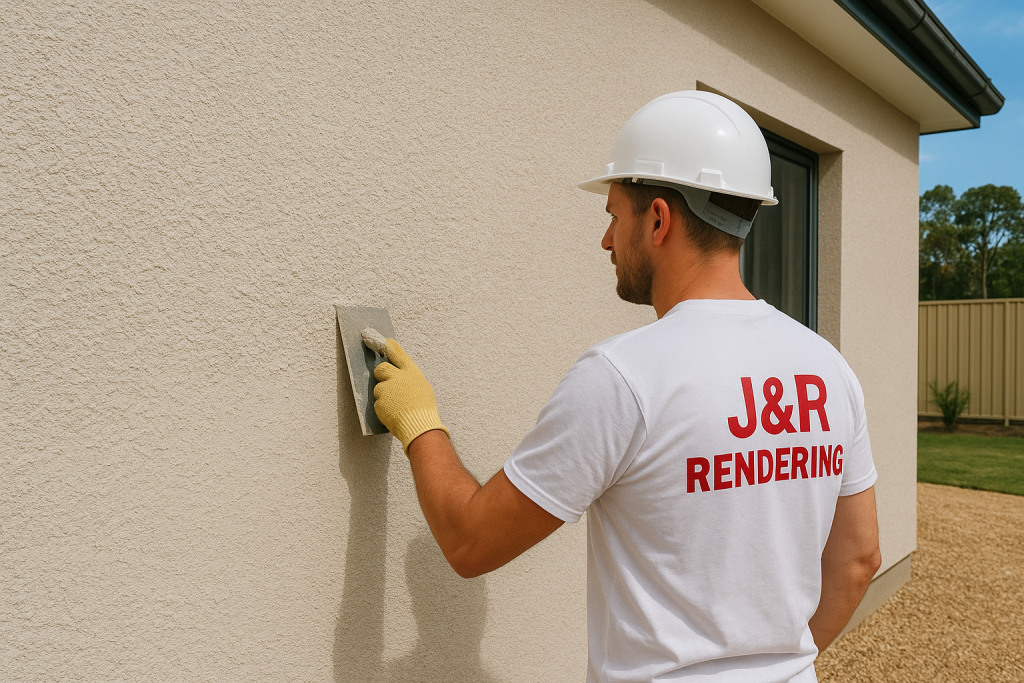
Let’s be honest with each other for a second. Somewhere in Sydney right now, there’s a perfectly good house wearing its 1970s brickwork like a hand-me-down jumper it never asked for. It’s not ugly, exactly. It’s just… under-dressed. And every single day that wall sits there unrendered, it’s soaking up UV, copping salt air off the coast, and slowly turning into a science experiment for moss.
Rendering fixes that. But “rendering” is one of those words tradies throw around assuming everyone knows what it means, when really most homeowners are Googling “what to do” at 11pm with a torch, standing in their backyard, staring at a hairline crack that definitely wasn’t there last summer. So we’ve written the guide we wish more people had before they picked up the phone — how rendering works, why it matters, what your options actually are, and how a Sydney-based crew like J & R Rendering approaches the job without the upsell nonsense.
So What Actually Is Rendering, Anyway?
Rendering is the process of applying a protective coating — traditionally a mix of sand, cement and lime, though modern acrylic and texture systems have joined the party — over brick, block or concrete surfaces. Think of it as a raincoat and a facelift rolled into one. It smooths out uneven brickwork, hides the sins of a dodgy old extension, and — this is the bit people forget — actually protects the structure underneath from moisture, salt air and the general beating that Sydney’s climate hands out.
If you’ve landed on this page, chances are you’ve already spotted a problem wall, or you’re renovating and weighing up finishes. Either way, J & R Rendering has been doing this across Sydney’s suburbs long enough to know that “just slap some cement on it” is exactly the kind of advice that leads to a callback in eighteen months.
Why Bother Rendering Your Home At All?
Good question, and a fair one — render isn’t cheap, so it should earn its keep. Here’s what it actually does for you:
- Weatherproofing. Sydney swings between baking summers, sideways coastal rain and the occasional hailstorm that seems personally offended by your gutters. A rendered wall sheds water instead of soaking it in, which means less chance of damp, efflorescence and structural nasties down the line.
- Kerb appeal that actually shows up in valuations. Real estate agents will tell you a fresh render is one of the cheapest ways to lift a sale price. Buyers judge a book by its cover, and your cover is currently a wall.
- Covering imperfections. Old brickwork, patchy mortar joints, mismatched extensions — render smooths the lot into one cohesive finish.
- Thermal benefits. A rendered and sealed wall can help regulate internal temperature slightly better than bare masonry, which your energy bill will quietly thank you for.
- It buys your brickwork time. Bricks and mortar do degrade. A quality render is essentially a suit of armour that slows that process right down.
Cement, Acrylic, Texture or Granosite — Which One Do You Actually Need?
This is where most homeowners get stuck, because every rendering company in Sydney seems to have seventeen different names for products that all sound suspiciously similar. Here’s the honest breakdown.
Cement Rendering: The Old Reliable
Traditional cement rendering in Sydney is a mix of sand, cement and lime, hand-applied and finished smooth or textured. It’s been the go-to for decades because it’s tough, relatively affordable, and gives that classic Mediterranean-meets-modern-Australian look you see on renovated Federation homes right through to newer builds in the Hills District. The trade-off is that cement render is rigid, so it can be prone to hairline cracking if the substrate moves — which is exactly why proper preparation and mix ratios matter more than most people realise.
Acrylic Rendering: The Flexible Cousin
Acrylic render swaps some of that rigidity for flexibility. It’s a pre-mixed, polymer-based coating that moves with the building rather than fighting it, which makes it a smart pick for homes with a bit of natural movement, fibre cement sheeting, or coastal properties where crack resistance and moisture protection are non-negotiable. Acrylic rendering Sydney jobs also dry faster than cement, which is handy when you don’t want scaffolding parked out front for a month.
Texture Coating: Where the Fun Colours Live
If cement render is the sensible sedan, texture coating is the one with the spoiler on the back. This is where you get to play with finish — fine sand, coarse aggregate, sponge, trowel, roller — to create depth and character rather than a flat, builder-grade surface. Texture rendering in Sydney is popular for feature walls, heritage-style homes wanting that bagged or roughcast look, and modern builds chasing a designer finish without the designer price tag.
Granosite: The One Nobody Explains Properly
Granosite gets mentioned constantly and explained rarely. In plain English: it’s an acrylic-based texture coating system that’s been used across Australia since the 1950s, applying fine aggregates over a smooth base to create a distinctive, durable, self-cleaning-ish finish. It hides minor wall imperfections beautifully, resists salt spray (handy if you’re anywhere near the water), and holds its colour longer than standard paint. A properly applied granosite finish in Sydney is genuinely one of the more durable options going around — some systems are rated to last decades with minimal upkeep.
What Happens When Render Goes Wrong
Not every render job ages gracefully. If your walls are showing any of the following, it’s less “character” and more “call someone”:
- Cracking, especially spider-web patterns radiating from corners or window frames
- Bubbling, blistering or render that sounds hollow when you knock on it
- Staining, discolouration or patches where water is clearly getting in behind the coating
- Render that’s flaking away in chunks (usually a sign the original mix or bond was never quite right)
Damaged render isn’t just cosmetic — it’s a warning sign that moisture is getting where it shouldn’t. Left alone, that can migrate into brickwork, timber framing and eventually your wallet. Sydney’s climate is not gentle on a botched rendering job, and salt air along the coast will find every weakness in a badly mixed or poorly applied coat. If any of that rings a bell, cement render repairs in Sydney are usually far cheaper than a full re-render, provided you catch the damage early rather than waiting for the wall to make the decision for you.
How We Help: Our Process, No Mystery Involved
We’re not fans of the “trust us, it’ll be great” approach. Here’s roughly how a J & R Rendering job actually runs:
- Free inspection and quote. We look at the wall, the substrate, existing damage and what you’re trying to achieve — then give you an honest number, not a lowball figure that mysteriously grows once we’ve started.
- Surface prep. This is the unglamorous step everyone skips in their head but it’s the difference between a render that lasts twenty years and one that’s cracking by Christmas. Cleaning, keying the surface, removing drummy or loose sections, and repairing existing cracks all happen before a drop of render goes on.
- Application. Base coats and finish coats applied to spec, whether that’s a smooth cement finish, a flexible acrylic system, a textured coat, or a full granosite build-up.
- Finishing and curing. Proper curing time matters. Rushed render is why some Sydney companies have a reputation for callbacks — we’d rather do it once, properly.
- Handover and guarantee. We back our work, and if something’s not right, we sort it. Simple as that.
Curious what that actually looks like on real Sydney homes? Our project gallery has plenty of before-and-afters from around the metro area, and if you’re into the nerdy detail of what goes into a durable finish, our products we use page runs through the specific systems and materials we work with rather than just vague marketing terms.
What Does It Actually Cost?
Every rendering company dodges this question because every job genuinely is different — wall size, substrate condition, access, finish type and prep work all move the number. What we can say is that render is one of the better dollar-for-dollar improvements you can make to a Sydney property. A tidy, professionally rendered exterior consistently outperforms a bare or tired-looking one at open homes, and the protective value stacks up over years of avoided repairs. The only way to get a real figure is a proper inspection — free, no strings, and no “limited time only” pressure tactics.
A Bit of Local Reality
Sydney is not one climate. A place in the Hills District bakes in summer and can get proper frost snaps in winter. Anything near the Eastern Suburbs, Northern Beaches or harbourside is dealing with salt-laden air that chews through inferior coatings. Inner West terraces often have heritage considerations and older brickwork that needs a gentler touch. A rendering job that ignores this local variation — and just applies the same system everywhere — is how you end up with premature cracking or discolouration. Any renderer worth calling should be adjusting mix, prep and finish based on where your place actually sits, not running a one-size-fits-all playbook.
FAQs
How long does cement render actually last in Sydney? Done properly, a cement render can last 30 to 50 years, though coastal exposure, poor original prep, or a cheap mix ratio can cut that dramatically. Acrylic and granosite systems tend to offer better crack resistance over that lifespan.
Can you render over an existing render that’s cracked or damaged? Sometimes, but it depends on why it cracked in the first place. If the substrate is sound and it’s surface-level damage, a repair and re-coat can work. If the bond has failed, it usually needs to come off first — otherwise you’re just painting over a problem that’ll resurface.
Is acrylic render better than cement render? Neither is objectively “better” — they suit different situations. Acrylic flexes with the building and resists cracking better, which makes it popular on fibre cement and coastal homes. Cement render is tougher, more traditional-looking, and often more budget-friendly for larger surfaces.
How do I know if I need a repair or a full re-render? Small, isolated cracks or chips are usually a repair job. Widespread cracking, hollow-sounding sections across large areas, or render that’s failing in multiple spots generally points to a bigger underlying issue worth a proper assessment.
Do you service all of Sydney or just certain suburbs? We work right across Sydney’s metro area — Inner West, North Shore, Eastern Suburbs, Hills District and beyond. If you’re not sure whether your area’s covered, just give us a bell.
How soon can you get someone out for a quote? Generally quick — we know a cracked or tired-looking wall isn’t something people want sitting on the to-do list for months. Get in touch through our contact page and we’ll organise a time that suits.