
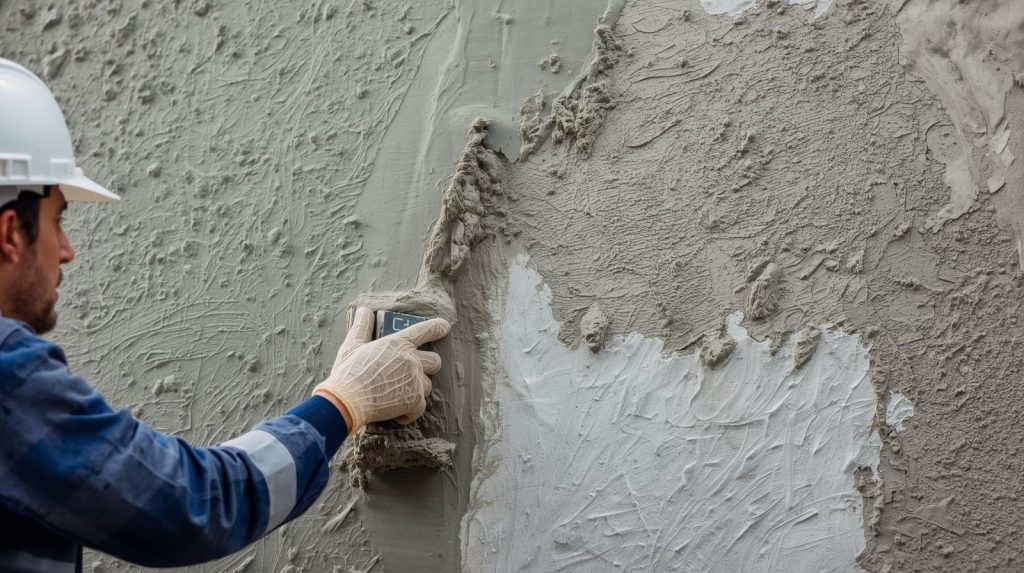
Let’s get something out of the way first: nobody has ever driven past a house and said “gee, I love that bare, blotchy brick.” Sydney’s full of homes doing their best impression of a half-finished renovation — perfectly good bones, wearing absolutely nothing. And the thing about naked brick is it’s not just a fashion problem. It’s a “slowly letting Sydney weather chew through your mortar joints” problem.
That’s where rendering comes in. Not the fancy overseas kind you see on renovation shows with a European name attached and triple the price tag — just good, solid Sydney rendering, done properly, by people who’ve been doing it since before “curb appeal” was a phrase real estate agents used unironically.
This is the long version. Grab a cuppa. By the end you’ll know your cement from your acrylic, your texture from your granosite, what it should cost, and why that hairline crack you’ve been “keeping an eye on” for two years needs more than eyeballs.
Why Should You Even Bother Rendering Your House?
Short answer: because Sydney’s climate is a jerk. Salt air on the coast, UV that could peel paint off a Hilux, and then a “once in a decade” storm that seems to roll through every second spring. Bare brick and old mortar cop all of that directly, and over time it shows — efflorescence (that chalky white bloom), spalling bricks, damp patches that appear on the inside wall for no reason you can explain to your partner.
A good render acts like a raincoat for your house. It’s a protective skin that sheds water, evens out imperfections, and gives you a surface that actually holds paint or colour properly instead of drinking it like a sponge. There’s also the vainer, more honest reason: rendering costs in Sydney typically sit around $30 to $50 per square metre for cement render and $45 to $70 for acrylic systems, and for that money you get a home that looks like someone actually lives there and cares, not one that’s just weathering quietly into the background.
If you’re mid-renovation, selling up, or just tired of your place looking like the “before” photo, rendering is one of the few jobs that pays you back in both street appeal and structure. Have a squiz through our project gallery if you want proof rather than promises — Sydney homes, warts and all, before and after.
What To Do First: Figure Out Which Render You Actually Need
This is where most homeowners get stuck scrolling forums at 11pm. There isn’t one “best” render — there’s a best render for your wall, your budget, and how much you enjoy repainting things. Here’s the honest rundown.
Cement Rendering Sydney: The Reliable Old Mate
Cement render is the OG. Sand, cement, and lime, trowelled on in coats, giving you that classic smooth or lightly textured finish you’ll see on Federation homes and brand-new builds alike across the city. It’s tough, it’s affordable, and it’s been protecting Sydney brick since long before “eco-friendly” was a selling point — it just naturally lasted.
The trade-off: cement render needs paint on top, and it can develop hairline cracks if the mix or the tradesman’s technique isn’t quite right (more on that below). But done properly, with the right coat structure and curing time, it’s one of the most cost-effective ways to transform a facade. If you want the specifics on process, coverage, and pricing, our cement rendering page walks through exactly how we approach it.
Acrylic Rendering Sydney: For the “I Don’t Want to Repaint in Five Years” Crowd
Acrylic render is the low-maintenance cousin at the family barbecue — a bit more expensive to invite, but nobody has to babysit it. It’s a pre-mixed, flexible finish that comes pre-coloured, so no separate paint job, and it flexes with minor building movement instead of cracking like a dry cement mix might.
It’s especially handy on newer builds, extensions, or anywhere you’ve got lightweight substrates that move a little with the seasons. If your priority is “set and forget,” our acrylic rendering service is worth a browse — it covers finishes, colour ranges, and where acrylic genuinely outperforms cement.
Texture Rendering Sydney: When Smooth Is Just Too Polite
Texture rendering is for homeowners who want their wall to say something. Instead of a flat, sponge-floated finish, you get depth — sand-textured, comb, or feature patterns that hide minor wall imperfections better than smooth render ever could (handy if your brickwork has seen a few decades of Sydney weather).
It’s also brilliant for feature walls, alfresco areas, and anywhere you want a bit of visual texture without going full heritage-cottage. Check out the range of finishes on our texture rendering page if smooth just isn’t your vibe.
Granosite Rendering Sydney: The Underrated One
Granosite doesn’t get nearly the airtime it deserves. It’s a durable, decorative textured coating that’s brilliant for masking uneven or older brickwork, and it holds up remarkably well against Sydney’s UV and salt-air combo. If cement is the reliable sedan and acrylic the newer hatchback, granosite is the tough little 4WD nobody talks about at dinner parties but everyone respects once they’ve actually used one. Our granosite rendering service breaks down where it shines and what finishes are available.
Cement Render Repairs Sydney: Because Cracks Don’t Fix Themselves
Here’s an uncomfortable truth: most render repair calls we get aren’t from render failing on its own — they’re from render that was rushed, mixed wrong, or applied over a wall that wasn’t properly prepped in the first place. Cracks, chipping, and that patchy “someone tried to fill it with Gumtree-sourced filler” look are all fixable, but only if you catch it early and get it done properly.
Leaving a crack “because it’s just cosmetic” is how a $200 repair becomes a $2,000 re-render, because water gets behind the render and starts working on the brick and mortar underneath. If your render’s looking tired, our render repair specialists can usually patch, blend, and match so well you’ll forget there was ever a problem.
How We Help: Our Process, Start to Finish
Every job — cement, acrylic, texture, or granosite — follows roughly the same backbone, and it’s the bit most cowboy operators skip:
- Inspection and free quote. We look at the actual wall, not a photo you sent us on your phone. Substrate condition changes everything.
- Surface prep. Cleaning, removing loose or failing old render, treating damp spots, and fixing structural cracks before a single trowel of new render goes on. Skip this step and everything after it is wasted money.
- Bonding coat. Gets the surface ready to actually hold the render, rather than fighting it.
- Render application. Applied in the correct number of coats for the system you’ve chosen — this is not a “slap it on and hope” job.
- Finish and cure. Smooth, textured, or patterned to your brief, then given proper time to cure before paint (if needed) goes on.
- Final walkthrough. We don’t disappear the second the last coat’s dry — we check it with you.
We’re proudly across all of it, using the same materials and methods we’ve refined over years of Sydney jobs — you can see exactly what goes into our mix on our products we use page if you like knowing what’s actually on your walls.
The Real Benefits (Beyond Just Looking Flashy)
- Weatherproofing. A proper render sheds rain and resists the salt-laden coastal air that eats lesser homes alive.
- Hides imperfections. Old brick, uneven mortar joints, patchy repairs from the last owner — render evens it all out.
- Boosts resale value. Kerb appeal isn’t just a buzzword; agents will tell you a rendered facade photographs (and sells) better.
- Insulation bump. A render layer adds a bit of thermal buffering, which your energy bill will quietly thank you for.
- Low maintenance (with acrylic/texture especially). No repainting every few years chasing fade and peeling.
None of this is marketing fluff — it’s the same stuff builders, engineers, and real estate agents will tell you if you ask them directly.
What Does Rendering Actually Cost in Sydney?
Nobody likes vague pricing, so here’s the honest range based on current Sydney market rates. <cite index=”9-1″>Rendering in Sydney typically costs $34 to $69 per square metre for cement render, $46 to $80 for acrylic, and $52 to $92 for texture coat finishes</cite>, with the final number shaped by wall height, access, and how much prep the existing surface needs.
<cite index=”9-1″>A single-storey home (around 150sqm of wall) generally lands between $6,300 and $14,950, while a two-storey job — factoring in scaffolding — runs from roughly $13,800 to $31,050</cite>. Cement render will need painting afterwards (budget extra for that), while acrylic and texture finishes come pre-coloured, which is part of why the higher upfront cost often balances out over time.
The only way to get a real number for your place is a proper inspection — wall condition changes the maths more than anything else. That’s a conversation best had over the phone rather than a guessing game online, so give us a shout via our contact page and we’ll sort a free quote.
DIY or Call a Pro? How to Decide
We’re not going to pretend a confident DIYer can’t mix cement and have a crack at a small garden wall. But full-house exterior rendering is a different beast — coat thickness, curing time, mix ratios, and getting a genuinely flat, professional finish across a whole facade take years to get consistently right. A botched DIY render doesn’t just look patchy; it can trap moisture against your brickwork and cause bigger problems than the ones you started with.
If it’s a small feature wall or garden retaining wall, sure, have a go. If it’s your home’s entire exterior — the thing every visitor, buyer, and passing neighbour judges your house by — it’s worth getting someone who does this daily, not annually.
Wrapping It Up
Rendering isn’t just cosmetic surgery for your house — it’s protection, it’s value, and yes, it’s also just nice to not be embarrassed by your own front wall. Whether you’re after classic cement, low-maintenance acrylic, a textured feature finish, an underrated granosite coat, or a repair job on render that’s seen better days, the right approach depends on your wall, your budget, and how long you want to forget about it afterwards.
We’ve written a fair bit more on specific finishes and Sydney suburb jobs over on our blog, if you want to keep reading past this one. Otherwise, give Ray and the team a call — we’ll have a look, tell you straight what your wall actually needs, and quote it properly the first time.
FAQs: Rendering in Sydney, Sorted
How long does rendering take on an average Sydney home? Most single-storey homes take roughly 3–7 working days depending on wall area, weather, and how many coats the chosen finish requires. Two-storey homes with scaffolding involved usually add a few extra days.
Can you render over old, cracked render instead of removing it? Sometimes, if the existing render is structurally sound and just cosmetically tired. If it’s hollow, crumbling, or lifting off the brick, it needs to come off first — rendering over a failing surface just hides the problem temporarily.
Is acrylic render really worth the extra cost over cement? If you want to avoid repainting and you’re on a wall that experiences minor movement, yes — the flexibility and pre-coloured finish often make up the price difference over 10–15 years.
Do I need council approval to render my house in Sydney? Usually no for like-for-like rendering of an existing exterior, but heritage-listed properties or significant facade changes can require approval. Worth a quick check with your local council if you’re unsure.
How do I know if my render needs repair rather than a full re-render? Small hairline cracks, isolated chips, or one damaged section usually just need a patch and blend. Widespread cracking, bubbling, or render that sounds hollow when tapped usually points to a bigger underlying issue worth having assessed properly.
What’s the difference between texture rendering and granosite? Both add texture and hide imperfections, but granosite is a specific decorative coating known for its durability and finish range, while “texture rendering” more broadly covers a variety of patterned and textured finishes achievable with different render systems.