
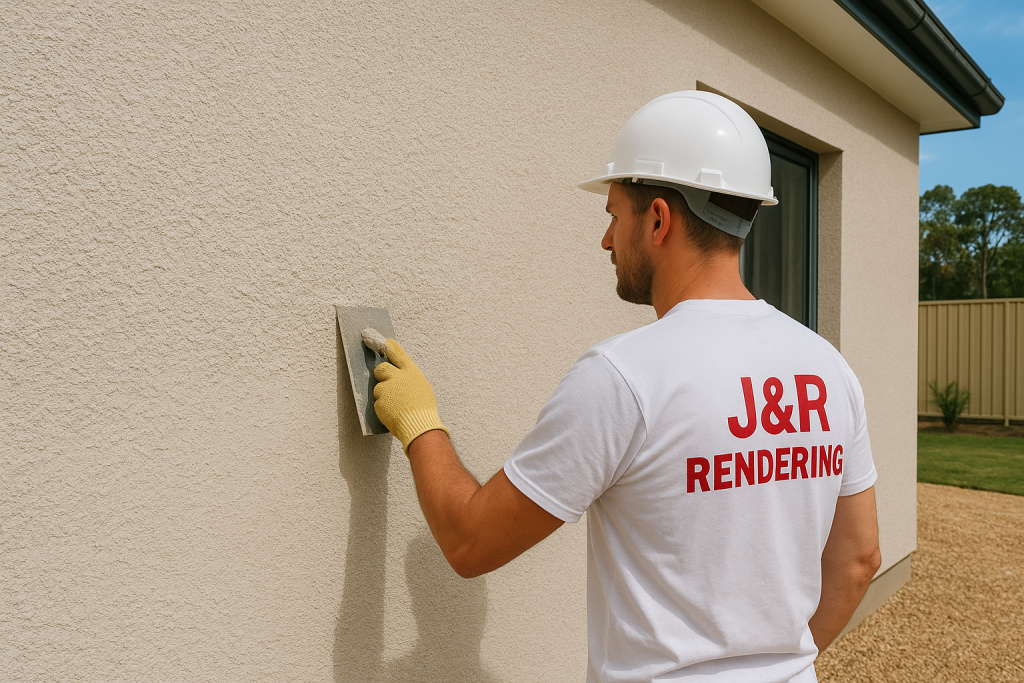
Drive through any Sydney suburb on a Saturday morning and you’ll see it: blokes up ladders, tarps flapping, and at least one bloke yelling “bit more to the left, mate” at another bloke holding a trowel. Rendering season is a Sydney institution, right up there with sausage sizzles outside Bunnings and everyone suddenly becoming a cricket expert in January.
But here’s the thing nobody tells you when you buy a house with bare brick or a render job that’s seen better decades: rendering isn’t just a lick of grey stuff to make your place look tidy for the street. Done properly, it’s the difference between a home that shrugs off Sydney’s wild weather swings and one that’s quietly falling apart behind a coat of paint.
We’re going to walk you through the whole rendering picture — the finishes, the costs, the “wait, what’s granosite again?” questions, and how to actually pick someone who won’t leave your façade looking like a bad spray tan. Full disclosure: this is brought to you by J & R Rendering, a Sydney rendering outfit that’s spent years getting cement under their fingernails so your walls don’t have to suffer. But we’ll keep the sales pitch to a minimum. Mostly.
Why Sydney Houses Need Rendering More than Most
Sydney’s climate is a bit of a diva. One week you’re dealing with humidity that makes your hair do things it shouldn’t, the next there’s a hailstorm flattening someone’s garden in the Hills District, and somewhere near the coast, salt air is quietly chewing through anything metal or porous. Add in the clay-heavy soils out west that shift with the seasons, and you’ve got a recipe for hairline cracks, damp patches, and brickwork that ages faster than it should.
This is exactly why affordable rendering Sydney searches spike every spring — homeowners spot the cracks after winter and want it sorted before the humidity rolls back in. Render acts like a raincoat for your walls. It keeps water out, hides a multitude of bricklaying sins, and — done well — adds real insulation value, meaning your aircon isn’t working overtime every February.
Cement Render: The Old Reliable
If rendering had a favourite uncle, it’d be cement render. It’s the classic combination of sand, cement and lime that’s been slapped on Australian homes since before your grandad’s shed was built, and for good reason — it’s tough, it’s relatively budget-friendly, and it gives that timeless smooth or lightly textured finish you see across older Sydney suburbs like Marrickville and Concord.
The catch is that cement render isn’t flexible. As your house naturally moves — and every house moves, whether you like it or not — cement render can develop hairline cracks over time, particularly around window frames and expansion joints. It’s not a dealbreaker, it just means you want tradies who know how to prep a wall properly before they even pick up a trowel. The team behind a proper cement render job will tell you the prep work — cleaning, priming, patching — matters more than the render itself. Skip that step and you’re just putting a nice jumper on a wound that needs stitches.
Acrylic Render: The Flexible Cousin
Enter acrylic render, the younger, bendier cousin who showed up to the family BBQ with better posture. Acrylic renders use polymer additives that give the finish some flex, meaning it handles the natural expansion and contraction of your walls without cracking as readily as straight cement.
It also comes pre-coloured, which means no repainting every few years, and it tends to resist Sydney’s mould and algae problems better in shaded, damp spots — handy if your place backs onto bushland or gets minimal winter sun. If you’re chasing that clean, contemporary acrylic render finish Sydney homeowners are increasingly asking for on their renovations, this is usually the pick. It costs a bit more upfront than cement, but a lot of people find the lower maintenance pays that difference back within a few years. Worth a proper chat with whomever’s quoting your acrylic render finish about which colour range suits your street’s vibe — nobody wants to be the one house that looks like it’s trying too hard.
Texture Render: When Flat Just Won’t Cut It
Not every home wants that smooth, painted look. Plenty of Sydney properties — especially the Mediterranean-inspired builds out in the Sutherland Shire or the more coastal Cronulla numbers — lean into a textured finish for character and grip. Texture coatings can be rolled, trowelled or sprayed to create anything from a subtle sandy finish to a heavier, more rustic profile.
Beyond the aesthetics, texture render is genuinely practical. It hides surface imperfections far better than a flat finish (so if your brickwork isn’t perfectly true, texture is forgiving), and it holds up well against Sydney’s UV exposure without showing wear the way a smooth surface might. If you’re after a textured render for homes Sydney buyers keep pinning on their inspiration boards, it’s worth looking at a few finished samples before committing — texture is one of those things that looks completely different on a small sample board versus a two-storey façade in full sun. A textured render option can genuinely transform a plain 1970s brick veneer into something that looks like it belongs on a design blog.
Granosite: The Underrated Workhorse
Granosite doesn’t get the credit it deserves. It’s been around Australia for over half a century and it’s essentially a heavy-duty acrylic texture coating that’s brilliant at doing one thing extremely well: covering up problems while looking sharp doing it.
Got a house with an awkward extension that doesn’t match the original brick? Got existing cracks you’re sick of staring at? Granosite bridges old and new sections seamlessly, and it’s particularly good at disguising surface flaws that would otherwise need expensive brick replacement or extensive patching. It’s also famously tough — a well-applied durable granosite finish Sydney properties can carry for 15 to 20 years with minimal fuss, which makes it one of the more cost-effective long-term options once you do the maths per year of service rather than per square metre upfront. If your place is a patchwork of eras and styles, a granosite finish is often the quiet hero that ties it all together without a full rebuild.
What About the Render You Already Have?
Not everyone reading this is starting from scratch. Plenty of Sydney homes already have render — it’s just render that was applied in 1998, hasn’t been touched since, and now looks like a topographical map of the Blue Mountains. Cracking, bubbling, and that dreaded “hollow sound” when you tap the wall are all signs your existing render has given up the fight.
The good news is you rarely need to rip the whole lot off and start again. Most issues — hairline cracking, water ingress around window sills, sections that have delaminated from the brick — can be addressed with targeted cement render repairs Sydney trades handle regularly. The trick is diagnosing why it cracked in the first place. Was it moisture getting behind the render? Poor original prep? Structural movement? A decent repair job fixes the cause, not just the crack, which is the difference between a patch that lasts two years and one that lasts twenty. Chasing down a render repair specialist who actually inspects before quoting (rather than guessing over the phone) will save you a world of pain.
So, What Does It Actually Cost?
Nobody likes vague pricing, so here’s the honest range you’ll typically see across Sydney in current market conditions:
- Cement render: roughly $30–$50 per square metre
- Acrylic render: roughly $40–$70 per square metre
- Texture coating: roughly $45–$80 per square metre
- Granosite render: roughly $35–$65 per square metre
A full single-storey home render usually lands somewhere between $4,500 and $15,000, with double-storey jobs pushing higher once you factor in scaffolding. Removing old, failed render before starting fresh can add another $15–$30 per square metre, and access issues — think steep blocks, tight side passages, or a cranky neighbour’s fence blocking the scaffold — can shift quotes too.
The honest advice? Be wary of quotes that come in dramatically under everyone else’s. Rendering is one of those trades where cutting corners on prep (skipping the crack stitching, not priming properly, rushing the curing time) doesn’t show up as a problem for a year or two — and by then the tradie who did it cheap is long gone.
Materials Matter More Than People Think
A big chunk of whether your render lasts 5 years or 25 comes down to what’s actually in the mix and how it’s applied — not just who’s holding the trowel. Reputable Sydney renderers are upfront about the products they actually use, including which brands, additives, and primers go into each job. If a quote won’t tell you what materials are involved, that’s worth a second thought.
Picking the Right Sydney Renderer (Without Losing Your Mind)
Here’s a quick, no-nonsense checklist for sorting the good operators from the “here today, gone before the warranty claim” crowd:
- Ask for photos of completed work at least 2–3 years old, not just fresh-off-the-scaffold shots. Render that still looks good after a couple of Sydney summers tells you more than a same-day photo ever will.
- Get written, itemised quotes covering prep, materials, coats, and any repair work — not a single lump figure scribbled on the back of a business card.
- Check they’re insured and licensed. This genuinely matters if something goes sideways on a two-storey job.
- Ask about the warranty on both materials and workmanship, and get it in writing.
- Trust your gut on communication. If they’re vague or dodge questions during the quoting stage, that pattern tends to continue once they’ve got your deposit.
A Word on Timing
Sydney renderers get flat out from September through to about April — everyone wants their place looking sharp for spring and summer. If your render job isn’t urgent, booking in during the cooler months (May through August) often means shorter wait times and, occasionally, a friendlier price, since crews aren’t run off their feet. Render also cures better in mild, dry conditions, so a well-timed winter job can actually outlast a rushed summer one.
Frequently Asked Questions
How long does a typical rendering job take? For an average single-storey home, expect anywhere from 3 to 7 working days depending on the finish, surface prep required, and weather. Double-storey homes or full renovations naturally take longer.
Can render be applied over old, cracked render? Sometimes, but not always. Loose or hollow sections need to be removed first — rendering directly over failing render just locks the problem in and speeds up the next round of cracking.
Is acrylic render really worth the extra cost over cement? For most homes, yes, particularly if you’re in a shaded, damp-prone spot or you want to avoid repainting every few years. If budget’s tight and your walls are in solid condition, cement remains a completely respectable choice.
Does render actually help with energy efficiency? Yes — a properly applied render, especially when combined with insulation-friendly additives, adds a layer of thermal resistance that can noticeably ease the load on heating and cooling.
How often does rendered exterior need maintenance? A light wash once or twice a year keeps mould and grime at bay. Beyond that, a well-applied render shouldn’t need major attention for well over a decade.
Do I need council approval to render my house? Usually not for a straightforward re-render of existing walls, but heritage-listed properties or significant façade changes can trigger approval requirements. Worth a quick check with your local council if you’re unsure.
The Bottom Line
Rendering isn’t just cosmetic — it’s one of the more practical investments you can make in a Sydney home, given what our weather throws at exterior walls year-round. Whether you’re leaning toward a classic cement finish, chasing a low-maintenance acrylic look, wanting texture for character, considering granosite to bridge mismatched sections, or just need honest repairs on a render that’s past its prime, the right approach comes down to matching the finish to your home, your budget, and your patience for maintenance.
If you want to dig deeper into specific finishes, costs, or before-and-afters from real Sydney jobs, it’s worth a browse through their blog for more detailed breakdowns. And if you’re at the point of wanting an actual number for your place rather than a general range, it’s easiest to just get in touch and have someone take a proper look.
Your walls have been holding up your roof for years without complaint. Give them a render that returns the favour.