
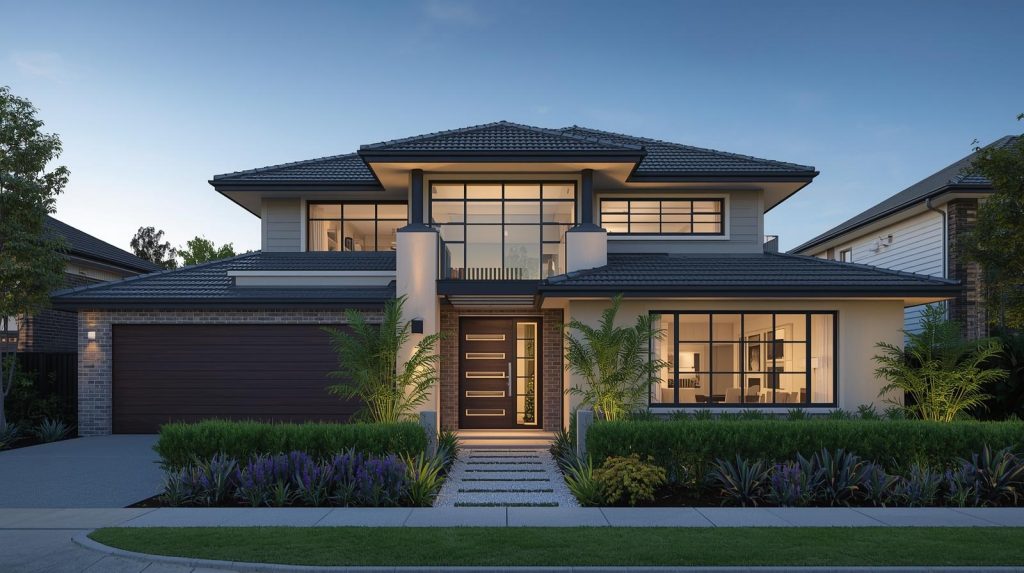
Drive down pretty much any street in Sydney and you’ll clock the same thing: a gorgeous double-brick home from the 60s, standing proud… next to a rendered wall that’s peeling like a bad sunburn. Cracks running sideways like a road map to nowhere. A patch job that’s a slightly different shade of “hopefully nobody notices.”
Walls talk. Ours just happen to speak in cracks, stains, and that dreaded hollow “thock” sound when you knock on them and think, that doesn’t sound right.
If you’ve landed here, chances are your place has been dropping hints. Maybe it’s flaking paint over old render. Maybe it’s a hairline crack that’s turned into the Grand Canyon over one wet Sydney summer. Or maybe you’re simply sick of your house looking like it’s still stuck in 1987 while the place next door got a slick, modern facelift.
Either way, you’re in the right spot. We’re J & R Rendering, and we’ve spent years crawling over scaffolding across every pocket of Sydney — from the sandstone-and-Federation streets of the North Shore to the salt-blasted facades out near the coast — sorting out exactly this kind of drama. Let’s talk about what’s actually going on with your walls, what your options are, and why “just slap some paint on it” is possibly the worst advice ever handed out in the history of home improvement.
First Things First: What Is Rendering, Actually?
Rendering, in plain English, is the protective (and good-looking) skin you put over brick, block, or concrete. It’s not just cosmetic lipstick on a pig — a proper render job is doing real structural babysitting, shielding your walls from Sydney’s charming combination of blazing UV, driving rain, and that salty coastal air that eats into masonry like it owes it money.
There isn’t just one type of render, though — and this is where a lot of homeowners get tripped up when they’re Googling around at 11pm trying to figure out why three different tradies gave them three completely different quotes for what sounds like “the same job.”
Cement Rendering — the OG
This is the classic. Sand, cement, and lime, trowelled on and finished smooth or slightly textured. It’s been the backbone of Aussie home exteriors for decades because it’s tough, breathable, and ages like a good cheese rather than a bad one. If your place is an older brick home that needs proper structural protection (not just a pretty face), traditional cement rendering is usually where the conversation starts.
Acrylic Rendering — The Flexible Friend
Acrylic render is basically cement render’s more limber cousin. Because it’s got polymers mixed through it, it flexes rather than cracks when the building moves slightly — which, in a city built on shifting clay soils like Sydney, happens more than you’d think. It also comes pre-mixed in a huge range of colours, so if you’re chasing that seamless, contemporary look without a painting job down the track, an acrylic render finish tends to be the pick.
Texture Coating — For the “I Want It to Pop” Crowd
Not every wall wants to be flat and smooth. Texture coatings let you dial in a pattern — fine, coarse, swirled, you name it — that adds depth and hides minor surface imperfections (handy if the brickwork underneath isn’t exactly showroom quality). If your Pinterest board is full of homes with that layered, sculpted exterior finish, texture coating is your friend.
Granosite Coating — The Old-School Heavyweight
Granosite has been knocking around Australia since the 1950s, and it’s stuck around because it flat-out works. It’s a thick, tough acrylic-based coating that can actually bridge small cracks rather than just sitting on top of them, which makes it a ripper choice for coastal properties or older commercial buildings that have seen a few things. If you want a finish that shrugs off salt air and doesn’t blink at temperature swings, granosite coating is worth a serious look.
Cement Render Patch Repair — The “Fix It Before It Gets Worse” Option
Sometimes you don’t need the whole wall redone — you need someone to sort out that one cracked, bulging, or crumbling section before it turns into a much bigger (and pricier) job. A proper cement render patch repair blends seamlessly with the existing finish so you’re not left with an obvious “band-aid” patch that sticks out like a sore thumb.
Why Sydney Homes Cop It Worse Than Most
Here’s the thing nobody tells you when you move to Sydney: this city is gorgeous, but it is absolutely relentless on exterior surfaces. We’ve got:
- UV that doesn’t muck around — Australian sun degrades cheap or poorly applied render faster than almost anywhere else in the world.
- Coastal salt exposure — if you’re within a few kilometres of the water (which, let’s be honest, is most of Sydney), airborne salt slowly attacks masonry and render alike.
- Wild humidity swings — sticky summers followed by dry snaps mean render is constantly expanding and contracting.
- Clay-heavy soils — subtle ground movement puts stress on walls, which is exactly why flexible renders and correctly applied systems matter so much.
None of this is meant to scare you — it’s just context for why a DIY render job from a YouTube tutorial, or a mate’s mate who “does a bit of rendering on the side,” often ends in tears (and a second, more expensive repair bill).
Signs Your Render Is Waving a White Flag
Not sure if your walls need attention or if you’re just being paranoid? Here’s what to keep an eye out for:
- Hairline cracks that are spreading — small cracks are normal ageing; growing or branching cracks mean water’s likely getting behind the render.
- Bubbling or blistering — usually trapped moisture and it’s not going to sort itself out.
- That hollow sound — tap the wall. If it sounds drummy rather than solid, the render has probably lost its bond to the substrate.
- Discolouration or dark patches — often a sign of water ingress, sometimes mould creeping in behind the surface.
- Crumbling at the edges — window sills, corners, and the bottom of walls (closest to the ground and moisture) usually go first.
- It’s just… tired — sometimes there’s no drama, the render’s just old, chalky, and dragging your street appeal down with it.
If any of that sounds familiar, it’s worth getting a professional set of eyes on it before summer storms or another salty coastal winter make the decision for you.
Cement, Acrylic, Texture or Granosite — How Do You Actually Choose?
Honestly? This is the bit where most homeowners get stuck scrolling forums at midnight. Here’s the no-nonsense version:
- Want maximum durability on an older brick home? Cement rendering is the tried-and-tested option.
- Want flexibility, colour choice, and low maintenance? Acrylic rendering is hard to beat.
- Want visual texture and depth, especially on a feature wall or facade? Texture coating does the heavy lifting.
- Right near the coast, or dealing with an older building that’s already got hairline cracking? Granosite coating is built for exactly that fight.
- Just need one dodgy section fixed, not the whole exterior redone? That’s a cement render patch repair job, plain and simple.
There’s rarely a “wrong” answer here so much as a “right for your specific wall, budget, and location” answer — which is exactly why a site visit and an honest chat beats guessing from a brochure every time.
What Actually Happens on a Rendering Job (No Surprises Edition)
A lot of Sydney rendering contractors will happily talk your ear off about the finish, but skip past the process — which is honestly where most of the value (and most of the risk of a dodgy job) actually lives.
- Inspection and prep — Every proper job starts with checking the substrate. Loose material gets removed, cracks get addressed, and surfaces get cleaned. Skip this step and even the best render mix in the world will fail early.
- Corner beads and control joints — Sounds boring, matters enormously. These stop cracking at vulnerable points like corners and control joints where movement concentrates.
- Base coat application — This is the structural layer doing the heavy lifting for weatherproofing.
- Texture or finish coat — Whichever finish you’ve chosen — smooth cement, acrylic, texture, or granosite — gets applied and worked to the agreed pattern and thickness.
- Curing — Render needs time (and the right conditions) to cure properly. Rushed curing in Sydney’s humidity is a classic cause of premature cracking down the track.
- Clean-up and final check — A tidy site and a walkthrough so you know exactly what’s been done and why.
None of this is rocket science, but it is a craft — and the difference between a render job that looks great for 15+ years and one that’s cracking again in 18 months usually comes down to how carefully these steps were followed, not which brand of product was used.
What We Reckon You Should Ask Before Hiring Anyone
Since you’re clearly the type who does their homework (you’ve read this far, after all), here’s what separates the genuine cement renderers Sydney homeowners rave about from the fly-by-nighters:
- Are you licensed and insured for rendering work in NSW?
- Can I see photos of similar jobs — ideally on a similar-aged home to mine?
- What products do you actually use, and why?
- What’s your process for handling existing cracks or damage before rendering over them?
- What does your warranty actually cover?
If a contractor gets cagey about any of those, that’s your answer right there.
A Quick Word on the Materials
The finish is only as good as what’s underneath it. We’ve been fairly particular over the years about the materials we trust on Sydney homes, because a top-shelf application with a cheap, chalky product is still, at the end of the day, a cheap job wearing a nice jacket.
FAQs — the Stuff Everyone Asks (Usually at the Worst Possible Time)
How long does cement rendering last in Sydney conditions? Done properly, a good cement render can last 20+ years. Coastal properties or poorly prepped surfaces will see that timeline shrink, which is exactly why prep and product choice matter so much.
Is acrylic rendering better than cement rendering? “Better” depends on the job. Acrylic flexes more and comes in more colours out of the tin; cement is the tougher, more traditional structural option. Plenty of Sydney homes actually use a combination — cement as the base, acrylic or texture as the finish.
Can you render over old, cracked render instead of stripping it back? Sometimes, if the existing render is still well-bonded and the cracks are minor. If it’s drummy, bulging, or badly cracked, it generally needs to come off first — otherwise you’re just rendering over a problem that’s still ticking away underneath.
How much does render repair cost compared to a full re-render? Patch repairs are almost always cheaper than a full re-render, provided the damage is caught early. That’s the whole argument for getting onto cracks and bubbling sooner rather than later.
What’s the difference between texture coating and granosite coating? They’re cousins rather than twins. Texture coating is a broader category covering various patterned finishes, while granosite is a specific, heavy-duty acrylic-based product known for its crack-bridging ability and coastal durability.
Do I need council approval to render my house in Sydney? Generally, rendering an existing wall doesn’t require council approval, but heritage-listed properties or certain overlays can complicate things. Worth a quick check with your local council if you’re in a heritage area.
How do I know if my walls just need a repair versus a full re-render? If the damage is localised — one crack, one section, one corner — a patch repair usually does the trick. If it’s widespread crazing, multiple areas losing adhesion, or the render’s simply reached the end of its life everywhere, a full re-render tends to be the more sensible long-term call.
The Bottom Line
Your walls have been dropping hints for a while now — the cracks, the hollow sound, the render that’s gone the colour of weak tea. The good news is none of it’s a mystery, and none of it’s beyond fixing. Whether you’re after a full cement render, a flexible acrylic finish, some texture with actual personality, a granosite coating that can handle salt air for breakfast, or just a tidy patch repair on that one cracked corner — there’s a sensible path forward.
If you’d rather stop diagnosing your own walls via Google Images and just get a straight answer from people who do this every single day across Sydney, get in touch with the team for a proper look and an honest quote. And if you’re the type who likes to read a bit more before picking up the phone, there’s more render know-how waiting for you too.
Either way — sort it now, while it’s a render job. Leave it too long, and it becomes a “why is there a tree growing out of my wall” job. Nobody wants that.