
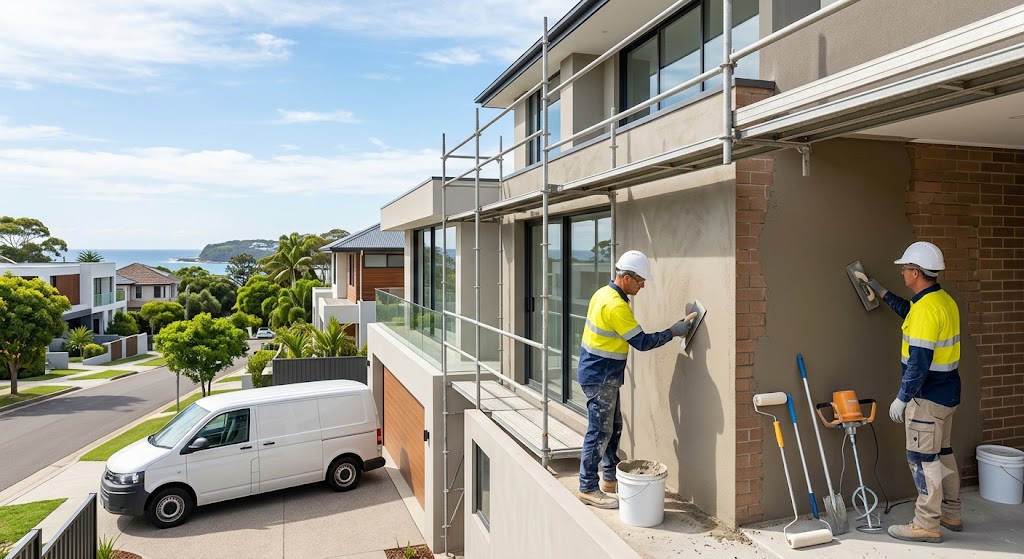
From cracked brick to knockout kerb appeal — the complete guide to rendering your Sydney home the right way, the first time.
Let’s be honest. You’ve driven past that house on your street — the one with the fresh, crisp rendered walls — and felt a tiny pang of envy. Maybe your own home is sitting there in tired, pockmarked brick, quietly judging you every time you pull into the driveway.
Don’t worry. You’re not alone. And more importantly — there’s a fix, and it’s a lot smarter than slapping another coat of paint on it and hoping nobody notices.
Welcome to your complete guide to cement rendering in Sydney — what it is, why it works, what it costs, and how to choose someone who’ll actually do it properly (spoiler: not your “mate who dabbles in building stuff”).
So, What Actually Is Rendering?
Think of rendering as a designer suit for your home’s exterior. It’s a protective and decorative coating applied to outside walls — and sometimes inside ones too — made from a carefully balanced mix of cement, sand, lime, and water.
But it’s not just cosmetic. Sydney’s climate is genuinely brutal on bare brick and block walls. One week you’ve got UV rays hammering down hard enough to fry an egg on your patio. The next, you’re dealing with driving coastal rain and humidity that loves sneaking into wall cavities. Unprotected walls crack, crumble, and absorb moisture over time, setting you up for expensive structural drama down the track.
Quality cement rendering services create a seamless, weather-resistant barrier between your walls and whatever Sydney decides to throw at them. Done properly by a licensed renderer, it’s one of the highest-return exterior upgrades you can make to a residential or commercial property.
You can explore the full range of professional rendering services available across Sydney to see which finish suits your home best.
The Different Types of Rendering — And Yes, They Actually Matter
Not all render is created equal. Walking into a project without understanding your options is how people end up with the wrong finish, the wrong material, or a bill they weren’t expecting. Here’s a plain-English breakdown:
Cement Rendering
The classic. Traditional cement rendering involves applying a mix of sand, cement, and lime to your exterior walls to create a smooth or semi-smooth base finish. It’s been the backbone of Australian residential rendering for decades, and for good reason — it’s incredibly durable, bonds brilliantly to brick and masonry, and gives you a clean, timeless look.
It does require painting afterward to add colour, and it’s a bit less flexible than some modern alternatives — meaning hairline cracks over time are possible (more on that shortly). But in terms of sheer longevity and performance on older Sydney homes, cement render remains the gold standard. Quality application lasts 20 to 30 years.
Acrylic Rendering
Exterior acrylic rendering has become increasingly popular across Sydney, and it’s not hard to see why. Acrylic render uses a polymer-modified mix that is pre-coloured, flexible, and exceptionally crack-resistant. Unlike straight cement render, it moves slightly with your building — particularly handy on homes with minor wall movement or in Sydney’s coastal zones where humidity fluctuates.
Acrylic also skips the painting step since colour is baked in. If you’re after a contemporary, low-maintenance finish with rich colour depth, this is your option. It runs a bit more per square metre, but the savings on future painting and repairs often even things out. Acrylic and texture coat renders can last 25 to 40+ years with minimal upkeep.
Texture Rendering
Want a wall that has some character — something that doesn’t look like every other rendered house in the street? Textured render for homes in Sydney is where design meets function. Texture rendering involves creating decorative patterns, finishes, and surfaces on rendered walls — from fine sand finishes and skip trowel effects to heavier, more dramatic stone-like textures.
If you’ve ever admired those textured exterior walls in Sydney’s newer estates or renovated Federation homes in the inner suburbs, that’s texture rendering at work. It hides surface imperfections brilliantly, adds genuine visual depth, and makes a rendered home look genuinely premium rather than just “done.”
Granosite Rendering
Granosite rendering is a specialist finish using Granosite — a pre-mixed acrylic texture coating — to achieve a defined, decorative result. It’s highly regarded for both its durability and its aesthetic versatility, and it’s particularly popular on commercial buildings, prestige residential projects, and properties where the owner wants something a cut above the standard acrylic finish.
The texture options available through Granosite are excellent, and the product’s track record in the Australian climate is hard to argue with. If you’ve been checking out the quality materials used by top renderers, Granosite features prominently for good reason.
Can You Render Over Wood? Yes — Here’s How It Works
One question that comes up regularly: can you render over wood or timber-framed walls?
Short answer: yes, absolutely. But it requires the right preparation and the right material.
Timber-framed homes need a fibre cement sheet or blueboard substrate before rendering is applied — this gives the render something solid and stable to bond to, prevents moisture issues, and ensures the finish doesn’t crack or delaminate over time. The process typically involves:
- Substrate installation — Fibre cement sheets (like Scyon or blueboard) are fixed over the timber frame to create a firm rendering surface.
- Surface priming — A bonding agent or base coat is applied to ensure proper adhesion between the substrate and the render.
- First coat (scratch coat) — The initial render layer is applied and scratched to create a key for the next coat.
- Second coat (float coat) — This layer is floated to a consistent thickness and texture.
- Finish coat — The final layer determines the texture and appearance — whether smooth, sand-faced, or decorative.
- Painting or sealing (for cement render) — A quality exterior paint or sealant locks in the finish and adds weather resistance.
For timber and lightweight construction, exterior acrylic rendering is often the preferred finish because of its flexibility and superior bond strength. A good renderer will assess your wall type before recommending a system — not after they’ve already started.
The Rendering Process: What to Expect from Start to Finish
Whether it’s your whole home or a single problem wall, a quality rendering job follows a methodical process. Here’s what it looks like when done properly:
- Inspection and Surface Preparation This is where the cowboys get caught out. Proper surface prep — cleaning, removing loose render, filling large voids, and applying bonding agents where needed — is what separates a finish that lasts decades from one that starts peeling by next summer. On older homes in suburbs like Drummoyne, Five Dock, or Baulkham Hills, this stage can be significant.
- Patching and Repair Existing cracks, hollow spots, or damaged sections are addressed before any new render goes on. If you’re dealing with cement render crack repair as a standalone job, this is essentially the whole project — done carefully to blend invisibly with the existing finish.
- Render Application Coats are applied in sequence with proper drying time between layers. For a standard cement render job, you’re typically looking at two to three coats. Rushing this stage causes problems — simple as that.
- Finishing Whether you’re going smooth, sand-finished, or full decorative texture, the finish coat is where skill really shows. This is what your neighbours are going to be admiring (or not) for the next 20 years.
- Painting or Sealing For cement render, a quality exterior paint completes the job and adds UV and moisture resistance. Acrylic render is pre-coloured, so this step may not apply.
Cement Rendering Cost in Sydney — Let’s Talk Numbers
This is the question everyone has but nobody wants to ask out loud at the hardware store. Fair enough.
Cement rendering cost in Sydney varies based on four main factors: house size, render type, surface condition, and access difficulty (scaffolding on a double storey adds cost).
As a rough guide for 2025–2026:
- Cement render: $34–$50 per square metre
- Acrylic render: $46–$80 per square metre
- Texture coat: Up to $92 per square metre
- Full single-storey home (approx. 150 sqm walls): $6,300–$14,950
- Two-storey home: $13,800–$31,050 (including scaffolding)
- Render removal (if required): $17–$46 per square metre additional
These are estimates — not promises. The only way to get an accurate price is a proper on-site inspection. Any renderer quoting firm prices over the phone without seeing the job is guessing, and that never ends well for you.
The best news? Rendering consistently delivers one of the highest ROIs of any exterior home improvement. It transforms kerb appeal, adds genuine property value, and saves you from more expensive repairs down the line. That’s a pretty solid argument for getting on with it.
Render Restoration and Crack Repairs — When Things Go Wrong
Life happens. Maybe the original rendering job was done years ago, or not done particularly well, or Sydney’s weather has just been relentless. Whatever the reason, render restoration and cement render crack repair is a common and totally fixable situation.
Hairline cracks are normal on cement render over time — the material is rigid and building movement is inevitable. What you’re watching for is cracks that grow, sections that sound hollow when tapped (called “blowing”), or areas where moisture is visibly penetrating the wall.
Left alone, these issues compound. Water gets in, freeze-thaw cycles and heat expansion widen the cracks, and what started as a cosmetic issue becomes structural. A competent renderer can assess, cut out damaged sections, re-render, and blend the repair so it’s barely visible — or use the repair as an opportunity for a full render refresh.
Why Hire a Licensed Renderer — Not Just Anyone With a Trowel
Here’s the truth that some bloke on Facebook Marketplace won’t tell you: rendering is a skilled trade. A botched rendering job is genuinely expensive to fix because you’re often paying for removal of the bad work before you can even start on the repair.
When choosing a renderer in Sydney, look for:
- Fully licensed and accredited — not just “experienced”
- Insurance — public liability at minimum
- Local reputation — verifiable reviews from Sydney customers, not just a generic website
- Clear written quotes — not verbal ballpark figures
- They inspect before quoting — any serious company does this
J & R Rendering ticks every one of these boxes. Ray and his team are fully accredited, have been delivering quality cement and acrylic rendering across Sydney’s metropolitan area for years, and have the testimonials from real Sydneysiders to back it up — from North Shore to Greystanes, Baulkham Hills to Putney.
The Benefits of Rendering Your Sydney Home — The Proper Summary
Still on the fence? Here’s why rendering is one of the smartest things you can do for a Sydney property:
Protection from the elements — Renders as a physical barrier against rain, coastal salt air, UV exposure, and humidity. Sydney’s weather is hard on unprotected walls.
Increased property value — Rendering consistently adds more value than it costs, particularly on older brick homes. Buyers notice kerb appeal immediately.
Modern aesthetic — Transforms dated brickwork into a clean, contemporary façade or a beautifully textured exterior that stands out.
Conceals imperfections — Uneven brick, patched blockwork, previous repairs — a quality render finish makes all of that invisible.
Lower long-term maintenance — A well-rendered wall is easier to clean, paint, and maintain than bare or weathered brick over a 20+ year period.
Improved insulation — Adds a layer of thermal insulation to your walls, which translates to slightly lower heating and cooling costs.
Crack and moisture prevention — A properly rendered wall is far more resistant to the small cracks and moisture ingress that cause bigger structural problems later.
Ready to Stop Looking at Those Walls and Actually Do Something?
Whether you’re starting fresh on a new build, refreshing a tired brick home, fixing render that’s seen better days, or chasing a specific textured finish you’ve had on your Pinterest board for two years — the path forward is the same.
Get a professional on-site to assess your walls, give you a proper quote, and walk you through your options. No pressure, no guesswork, no nasty surprises.
J & R Rendering offers free inspections and quotes across all of Sydney. Ray and the team work across cement rendering, acrylic rendering, texture coating, Granosite rendering, and render repairs — so whatever your walls need, it’s covered.
Head over to the blog for more tips, project showcases, and straight-talking advice on getting the most from your rendering project.
Call Ray today on 0414 381 122 — your walls have waited long enough.
J&R Rendering services all Sydney metropolitan areas. Fully licensed and accredited. Free quotes available.